Three aluminum alloy families dominate liquid cold plate construction: 6061, 6063, and 1100. They look similar on a spec sheet but have meaningfully different production economics, thermal performance, and reliability profiles. This piece walks through what actually drives the selection.
The candidates
**6061-T6** is the strongest of the three. Magnesium-silicon precipitation hardening, ultimate tensile strength around 310 MPa. Used historically for structural aluminum extrusions, aerospace, and battery enclosure shells.
**6063-T5/T6** is the extrudability champion. Lower magnesium content than 6061 produces softer billet that flows readily through complex extrusion dies — including the multi-channel profiles used for liquid cold plate flow paths. UTS ~190–220 MPa.
**1100** is essentially pure aluminum (>99% Al). Highest thermal conductivity (~222 W/mK vs ~167 W/mK for 6061), best corrosion resistance, but very low strength (UTS ~90 MPa). Used for thin sheet and clad layers, rarely for structural cold plate bodies.
Why thermal conductivity matters less than people think
A common mistake in cold plate alloy selection is over-weighting raw thermal conductivity. The argument goes 'pure aluminum has 35% higher thermal conductivity than 6061, so 1100 must produce a better cold plate.' This is wrong in practice for two reasons:
First, the bottleneck in cold plate heat transfer isn't the aluminum itself. It's the convective coefficient between aluminum and coolant, the thermal interface between cell and plate, and the cell's own internal thermal resistance. Even if you doubled the aluminum's thermal conductivity, total system thermal resistance would drop maybe 5–8%.
Second, low-strength alloys can't be made into structurally adequate cold plate bodies for commercial vehicles. A 1100-aluminum cold plate would deflect under coolant pressure and fail under vibration. So the question isn't 'which has the highest conductivity' — it's 'which has acceptable conductivity AND acceptable strength AND acceptable extrudability AND acceptable cost.'
Why 6063 wins for most cold plates
The practical answer for the majority of commercial liquid cold plates is 6063-T5 or T6. Reasons:
•**Extrudability**. Cold plate flow channels need extruded profiles with multiple internal cavities. 6063 flows through complex dies at lower pressure than 6061, allowing thinner walls (1.5–2.0 mm) and tighter channel spacing. 6061 typically requires walls 2.5+ mm or simpler profiles.
•**Thermal conductivity**. 6063 conductivity (~209 W/mK) is actually higher than 6061's (~167 W/mK), despite 6063 being a 'softer' alloy. This is because 6063 has lower copper content.
•**Adequate strength**. 6063-T5 UTS of ~190 MPa is sufficient for cold plate operating pressures (5–10 bar typical) when wall thickness is 1.5+ mm.
•**Weld behavior**. Both 6063 and 6061 are FSW-compatible. 6063's lower magnesium content reduces FSW tool wear ~25% vs 6061.
•**Cost**. 6063 mill stock typically prices 5–10% below 6061 due to lower alloying additions.
When 6061 is the right choice
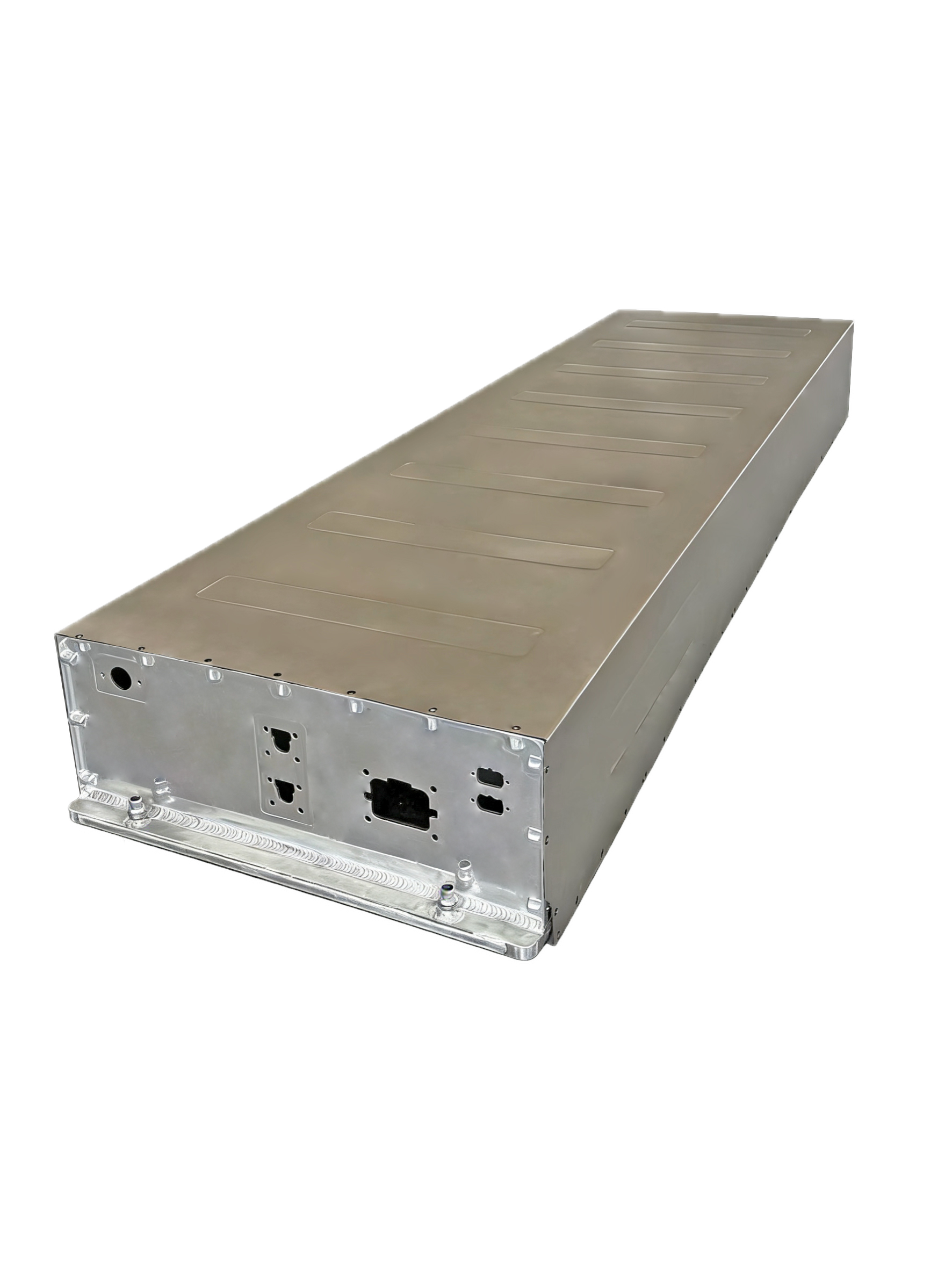
For cold plates that double as structural elements — for instance, a cold plate that also serves as the bottom panel of a battery enclosure carrying mechanical load — 6061-T6's higher strength matters. Common application: military and mining-vehicle battery packs where the cold plate is part of the floor structure.
The tradeoff: harder to extrude complex flow paths, more FSW tool wear, slightly higher cost.
When 1100 series is used
1100 aluminum is too soft for structural cold plate bodies, but it's commonly used as:
•The clad layer on brazed cold plates — the ~5% Al-Si layer that becomes the brazing filler
•Thin (0.5–1.0 mm) inner-fin sheets in 'fin-and-tube' style cold plates
•High-thermal-conductivity bus bars or thermal interface plates
If a vendor quotes 'pure aluminum' or '1xxx series' for a structural cold plate, that's a red flag — it almost certainly means a thin clad layer with the actual structural metal being 3xxx or 6xxx series underneath, and they're either not familiar with the construction or being deliberately misleading.
Production realities
A few details that don't show up in alloy spec comparisons but matter for delivered parts:
•**Mill source consistency**. Aluminum chemistry varies between mills even within the same alloy designation. A vendor sourcing 6063 from multiple mills will see 5–10% variance in extrusion behavior batch-to-batch. Look for vendors that consolidate their mill sourcing for cold plate production.
•**Heat treatment uniformity**. T5 vs T6 vs T7 designations refer to specific heat-treatment cycles. Vendors that don't have in-house heat treatment can't guarantee uniformity. Most quality cold plate manufacturers run their own T5/T6 furnaces.
•**Surface finish**. Cold plate surfaces in contact with cells need consistent flatness (typically within 0.1 mm/m) and surface roughness (Ra <1.6 µm) for predictable thermal interface performance. Alloy choice affects post-extrusion machining behavior.
What to ask suppliers
When evaluating cold plate vendors, alloy-specific questions:
•What alloy and temper do you use, and why? (Right answer: 6063-T5 or T6 for most products, 6061-T6 for structural applications)
•Do you have mill certification traceability per batch?
•In-house heat treatment or outsourced?
•What's your post-extrusion flatness specification?
•For brazed cold plates: clad alloy and clad-to-core ratio?
Vendors that can answer these specifically, with documentation, are operating at automotive-supplier maturity. Vendors that say 'we use aluminum' or 'standard aluminum alloy' are not.
Keyuan's selection
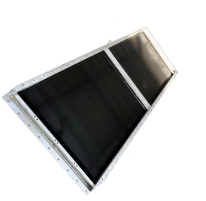
For reference: Keyuan uses 6063-T5/T6 for the LC H/G/C series and most LCP cold plate products — extruded in-house from consolidated 6063 mill sources, in-house T5/T6 heat treatment, FSW-joined. We use 6061-T6 specifically for structural battery enclosure components on the A-Box and ex-proof boxes. Mill certification is tied to batch traceability per IATF 16949 requirements.
If you're qualifying a cold plate vendor and want to compare against ours on alloy chemistry, mill source consistency, or post-extrusion processing — ask.